
How to Care for a Leather Bag
A Complete Guide to Cleaning, Conditioning, and Making It Last
A good leather bag is one of the few things you buy that's designed to get better with age, not worse. But that only happens with the right care. After years working with Australian leather and full-grain hides, these are the questions we're asked most often — and the honest answers behind them.
Why Leather Care Matters More Than You Think
Full-grain leather, the kind used in genuine leather bags for women and men alike, is a natural material. Unlike synthetic alternatives, it doesn't wear out — it wears in, softening and developing a rich patina over time. But that ageing process only looks good when the leather is properly cared for. Left dry or neglected, leather can crack, stiffen, or lose the natural finish that makes it worth investing in.
Whether you're carrying a leather tote bag to work every day, a leather crossbody bag on your travels, or a leather laptop bag between meetings, a little routine care goes a long way.
How Often Should Leather Bags Be Cleaned?
Most leather bags don't need frequent deep cleaning. For everyday leather shoulder bags and leather tote bags, a quick wipe-down with a soft, dry cloth every couple of weeks is enough to keep dust and surface grime from building up.
A deeper clean and conditioning treatment is generally only needed every three to six months, depending on how often the bag is used and the climate you live in. Bags used daily for travel or work — especially leather work bags exposed to changing weather — may need conditioning slightly more often.
How Do You Clean a Leather Bag?
- Start dry. Use a soft, lint-free cloth to remove surface dust before introducing any moisture or product.
- Spot clean carefully. For marks or spills, a barely damp cloth is usually enough. Avoid soaking the leather — excess water can cause staining or watermarks, particularly on lighter tan leather bags.
- Avoid household cleaners. Soap, baby wipes, and all-purpose sprays can strip the natural oils in the hide and damage the finish. Use a leather-specific cleaner formulated for genuine, full-grain leather.
- Let it air dry. Never use direct heat (hairdryers, heaters, direct sun) to speed up drying — this can dry out and crack the leather.

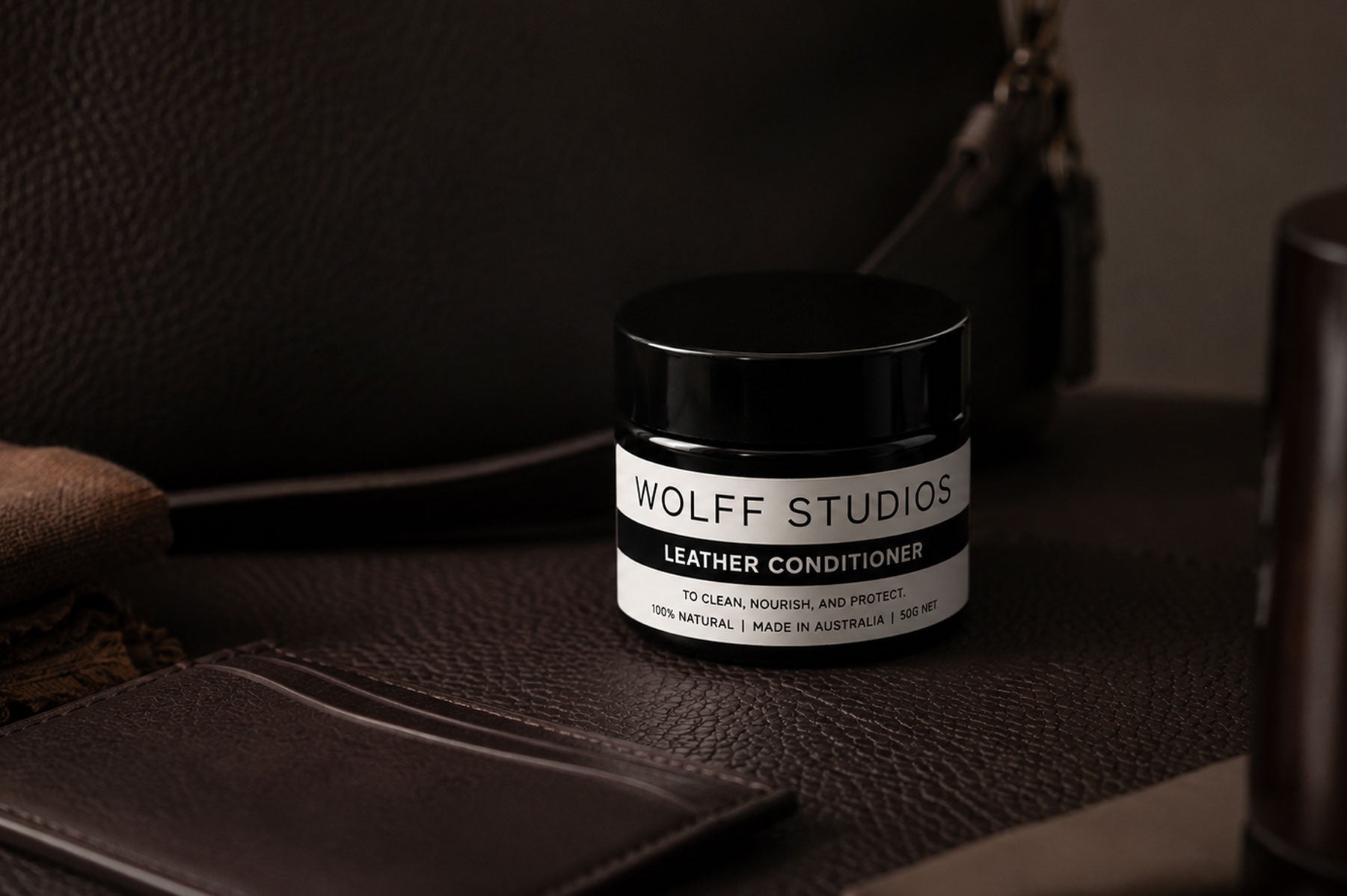
How to Condition a Leather Bag
Conditioning is the step people skip most often, and the one that matters most for longevity.
- Apply a small amount of leather conditioner to a clean, soft cloth — a little goes a long way.
- Work it into the leather in small, circular motions, paying attention to high-contact areas like handles and corners.
- Allow the conditioner to absorb fully before using the bag again — this can take a few hours.
- Buff gently with a dry cloth if a slight shine remains.
Conditioning doesn't just clean the leather — it feeds it, keeping the hide supple rather than dry, and helping the surface develop a deep, even patina rather than premature wear.
Storing Your Leather Bag Properly
How a bag is stored between wears matters almost as much as how it's cleaned.
- Keep it stuffed. Fill the bag loosely with tissue paper or a soft cloth to help it hold its shape, particularly for slouchier or unstructured styles.
- Avoid plastic. Leather needs to breathe. Store bags in a breathable dust bag or pillowcase rather than sealed plastic, which can trap moisture and encourage mould.
- Keep it out of direct sunlight. UV exposure fades leather unevenly over time, particularly noticeable on black leather bags and darker chocolate tones.
- Watch the humidity. Leather can dry out in very dry climates or develop mould in very humid ones. A stable, moderate environment is best.
What Makes Some Leather Bags Last Longer Than Others
Not all leather is created equal, and this is where the quality of the hide and the tanning process makes a real difference.
- Full-grain leather is the highest grade available. Because the surface is left untouched rather than corrected or heavily coated, it ages more gracefully and develops character over time — unlike lower grades that crack or peel as the coating wears away.
- The tanning process matters. Leather tanned using modern, eco-efficient methods (like SFERE technology) tends to be more consistent in quality and better for long-term durability.
- Traceable, ethically sourced leather — such as Australian leather, a natural by-product of the meat industry — tends to come from more rigorously regulated supply chains, which generally means more consistent hide quality.
A Quick Care Checklist
- Wipe down every 1–2 weeks with a dry, soft cloth
- Spot clean gently as needed, avoiding household cleaners
- Condition every 3–6 months, more often with heavy use
- Store stuffed, breathable, and out of direct sunlight
- Avoid overloading or overstretching handles and straps
Final Thought
A well-made leather bag is meant to be a long-term companion, not a seasonal purchase. The small, consistent habits — a wipe here, a conditioning session there — are what let a genuine leather bag do what synthetic materials can't: age beautifully, hold its shape, and become more distinctly yours with every year you carry it.
Wolff Studios designs full-grain Australian leather bags for women who move between work, travel, and everyday life. Read more about our leather and our production process on our site.
